
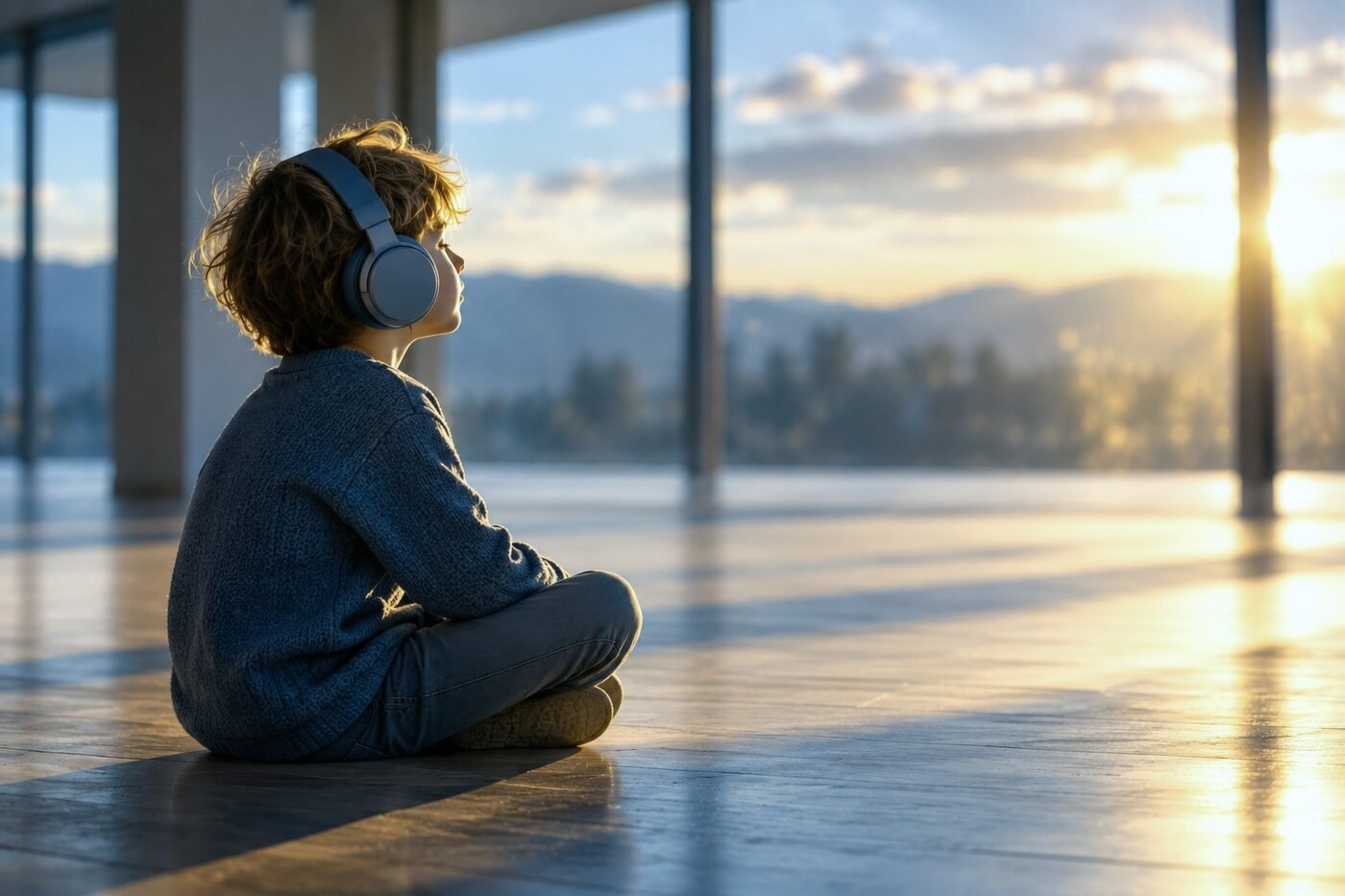
Noise is the number one complaint of parents of sensitive children. And noise-cancelling headphones are the number one solution that comes up in any search. They do work, but there is small print.
What exactly happens with noise
It isn’t that they hear it louder. It is that their nervous system discards less. A child low in sensitivity puts the hum of the projector, the squeaking chair and the conversation at the next table into a drawer, and keeps what the teacher is saying. The sensitive one goes on hearing all of it at once.
That has a cost you don’t see: in order to attend to one thing they have to spend energy ignoring the others. That is why they come out of school exhausted without having done anything physical.
When headphones help
In one-off, intense situations with an end to them: a long journey, a concert, fireworks, a shopping centre at Christmas, the school gym on the day of a show. There the headphones are what lets them stay in the place rather than having to leave. That is exactly what we want.
They also help with tasks that demand concentration in an environment you can’t control: doing homework with small siblings around, reading in a waiting room.
When they get in the way
When they go from being a tool to being armour. If they end up wearing them in class all day, in the playground, at family meals, the effect turns around. They stop building any tolerance for ordinary noise, they drift away from the group without meaning to, and something worse appears: the idea that they can’t manage without them.
The warning sign is easy to spot. If they ask for them in places they used to tolerate, the headphones have stopped helping.
The rule that seems sensible to me
Headphones for peaks, not for daily life. And always alongside the other two things, which are what really build something:
Scheduled breaks. Getting out of the noise before being overwhelmed, not after. Ten minutes somewhere quiet halfway through the afternoon is worth more than an hour of headphones.
Naming what is happening. “There’s a lot of noise here, it’s normal that it tires you out.” With that they learn to identify the cause outside themselves, rather than concluding that there is something odd about them.
Less total alternatives
Between wearing nothing and shutting themselves off completely there is ground to cover:
- Soft silicone earplugs. They bring the volume down without cutting out the human voice.
- Headphones without active noise cancellation, passive only. They muffle less and disconnect less.
- Instrumental music at low volume, which masks irregular noise without isolating them.
- Sitting away from the source: from the door, from the fan, from the corridor.
The noise at home
Before buying anything, it is worth doing a review. Many homes have a constant background of noise that nobody notices any more: the television on with nobody watching it, the extractor fan, the dishwasher at homework time, a phone vibrating on a wooden table.
Switching off two of those things usually makes more difference than a two-hundred-euro pair of headphones.
The advanced strategies for managing overstimulation take up a whole chapter of Niños Altamente Sensibles.