For readers of the book
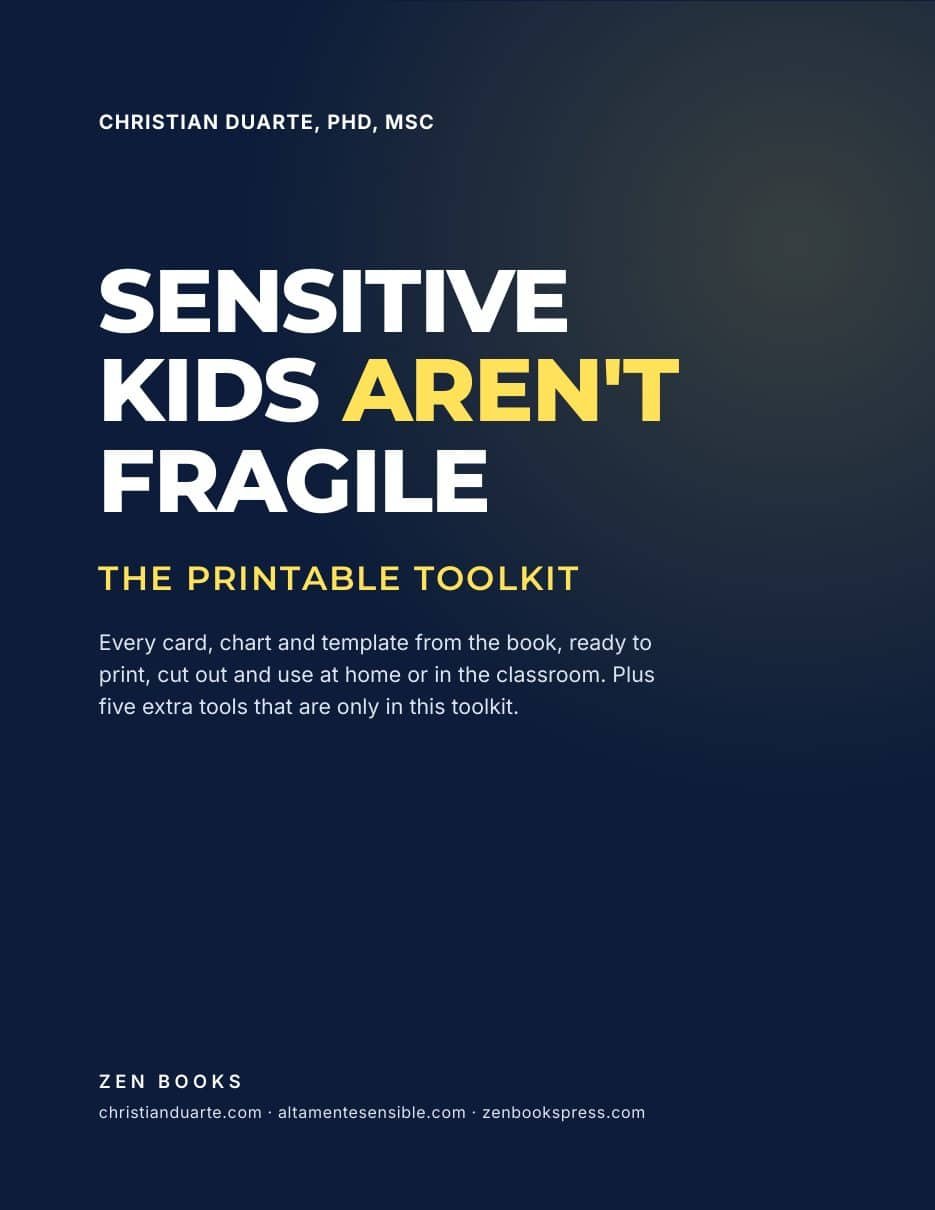
SENSITIVE KIDS AREN’T FRAGILEThe Printable Toolkit
Every card, chart and template from the book, ready to print at full size. Plus five extra tools that are only in this toolkit.
Send me the toolkitLook inside
FREE · 28 PAGES · US LETTER AND A4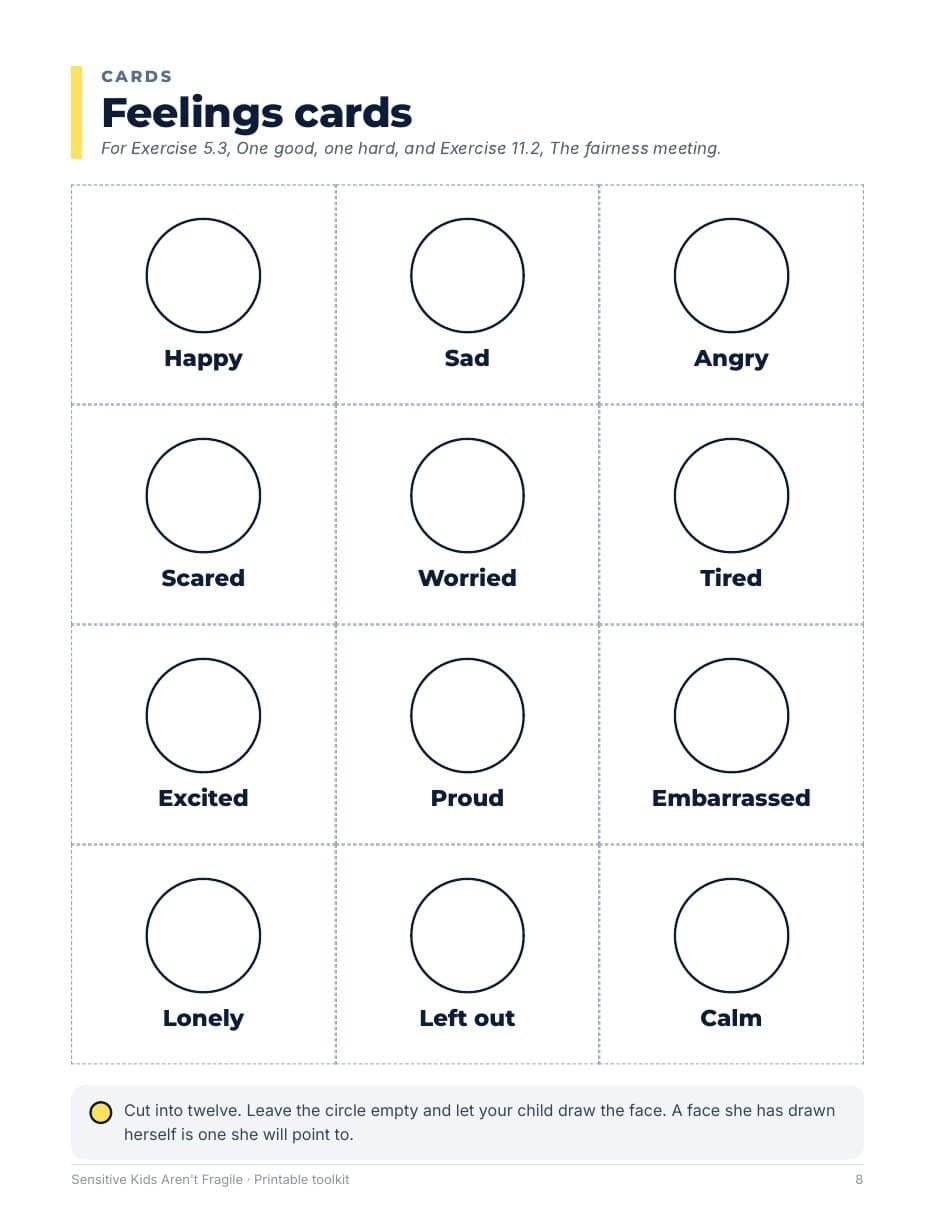
An old fable
The oak and the reed
The oak laughed at the reed for bending with every breeze. One night a storm came down the river. The oak stood stiff, and by morning it lay across the bank. The reed had bent all night long, and at sunrise it was still there.
Bending is not breaking. A sensitive child feels every gust. With the right tools, that child bends, and stands up again.
What’s inside
The pages the book asks you to print
You may copy these pages freely for use at home or in your own classroom.
Feelings cards
The feelings cards and the landing card.
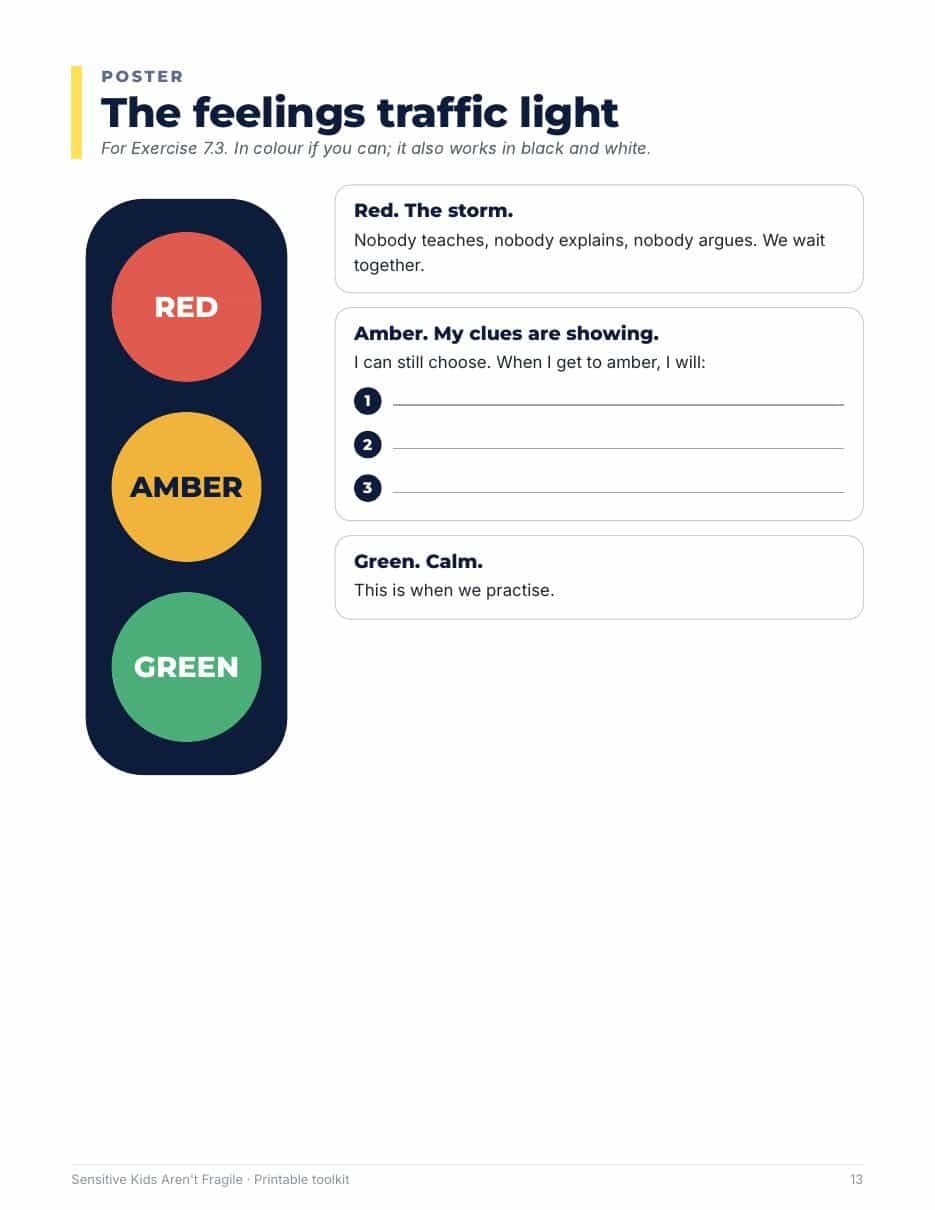
Body and big moments
The body outline, the feelings traffic light and the party map.
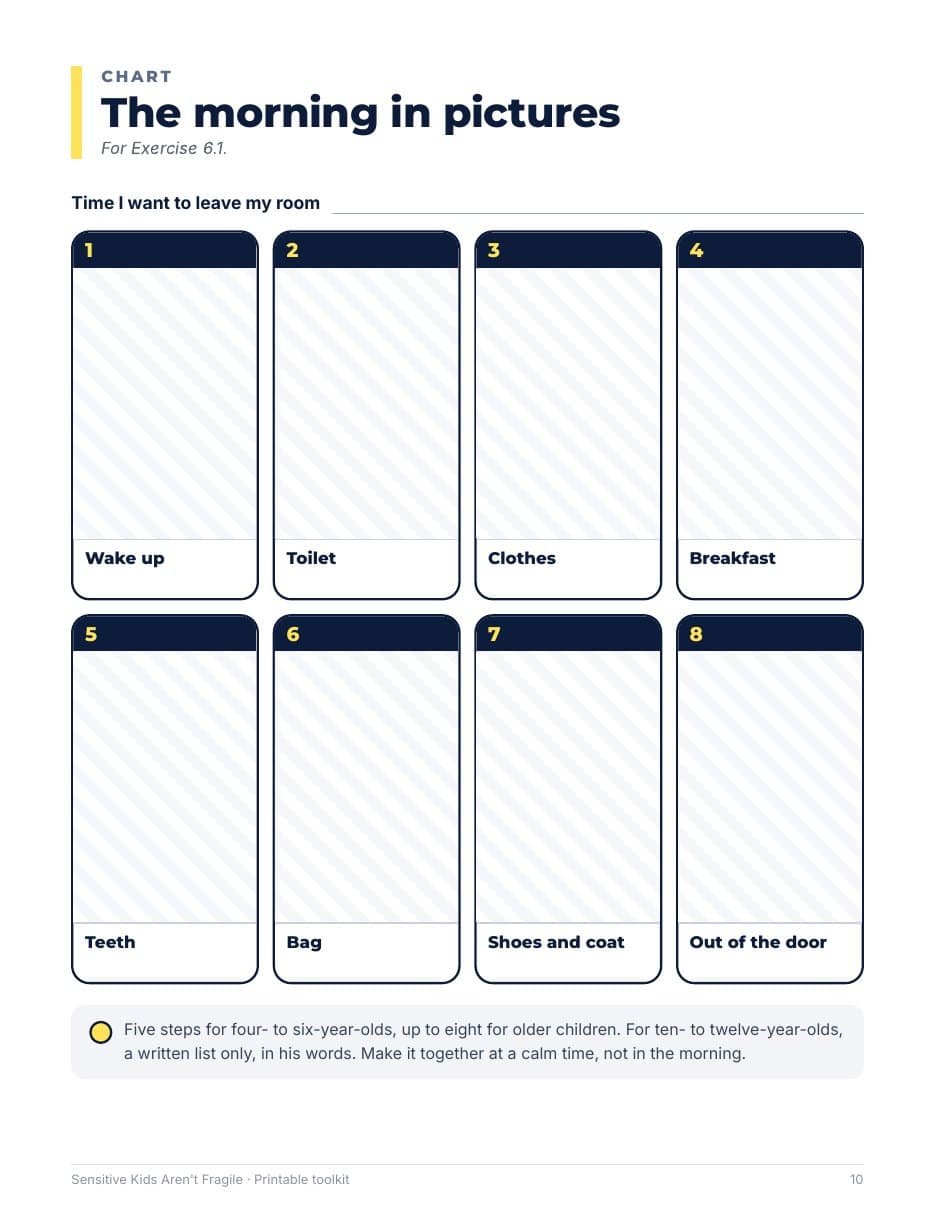
Mornings and evenings
The morning in pictures, the wind-down card, the screen calendar and the strengths journal.
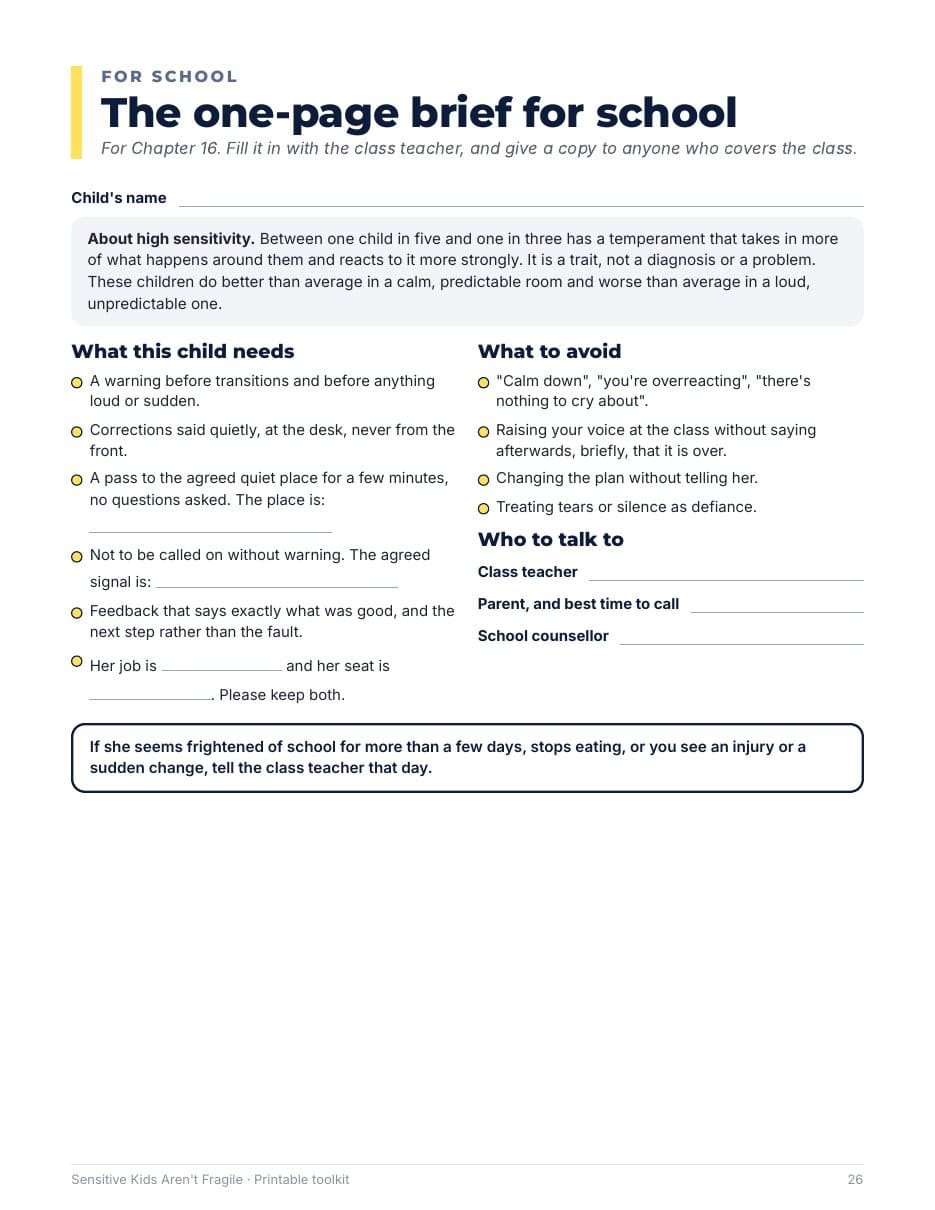
The brief and the letter
The one-page brief for school and the letter to the teacher.
Only in this toolkit
Five extra tools
The 30-day plan from the front of the book, on one page.
Two minutes a day for seven days, before you change anything.
What to say when you cannot think, on one page.
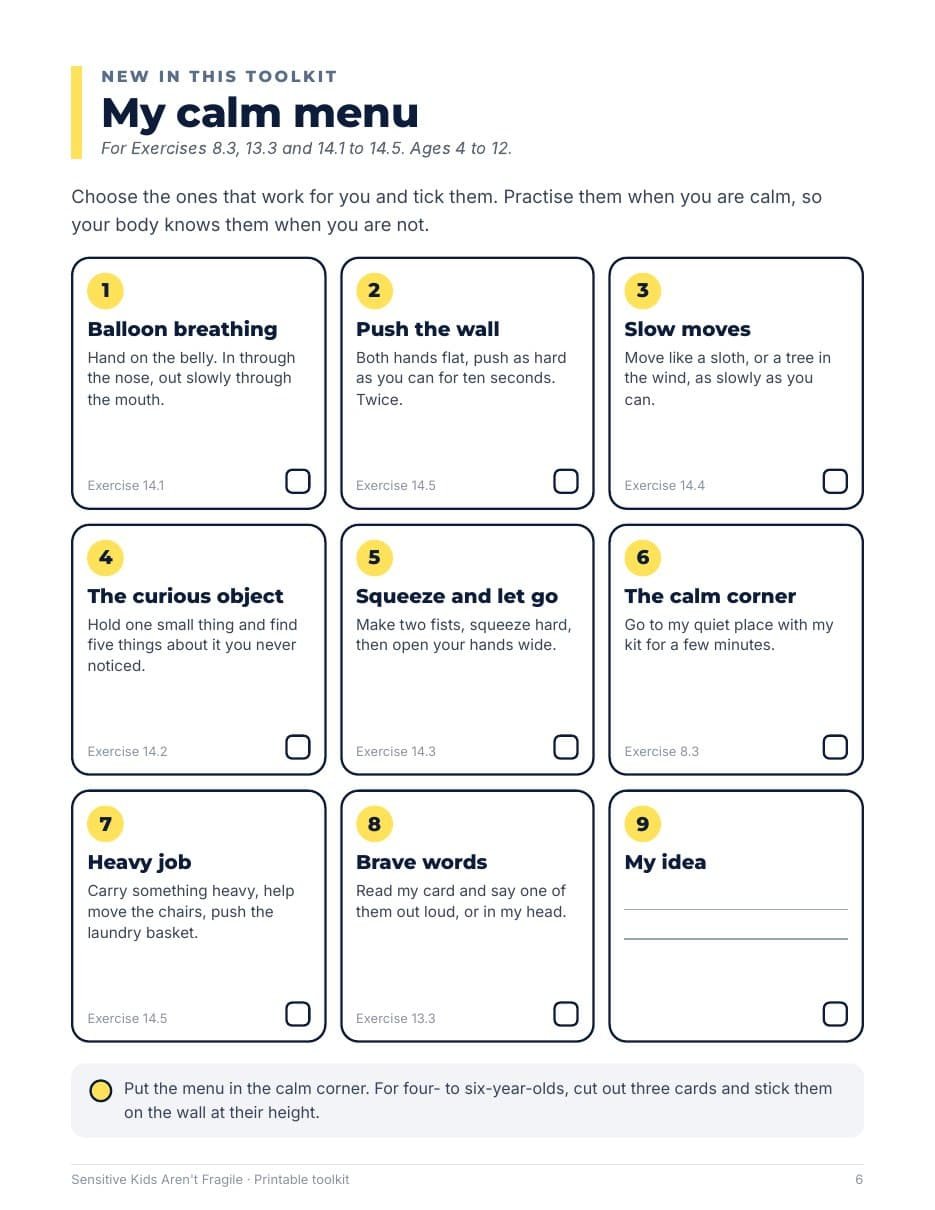
Nine ways to calm down, for your child to choose and tick.
The thermometer and your three sentences, one set for each adult.
How it works
Get your toolkit
Write your email below. Your name is optional.
Download the toolkit right away, in US Letter or A4.
We’ll also send the link to your inbox so you can print it again whenever you need it.
There is an optional box in the form. If you tick it, I will write to you now and then about raising sensitive children. If you do not tick it, you get the toolkit and that is it: I do not sign you up for anything.
Data protection: the controller is Christian Duarte and the processor is Wild Mail (Wild Audience S.L.). Your data is used only to send you the toolkit and, if you tick the box, the occasional newsletter. You can unsubscribe at any time. More in the privacy policy.
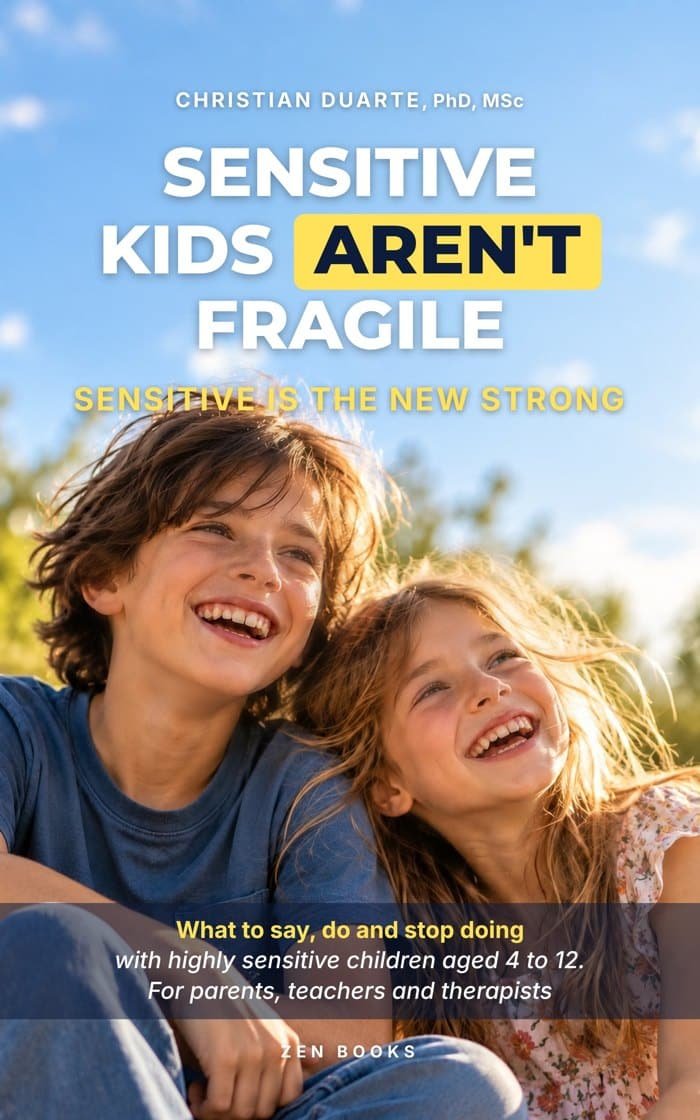
The book
Sensitive Kids Aren’t Fragile
What to say, do and stop doing with highly sensitive children aged 4 to 12. For parents, teachers and therapists.
Every sheet in this toolkit belongs to an exercise in the book, where you will find how and when to use it.